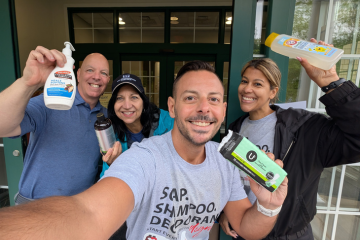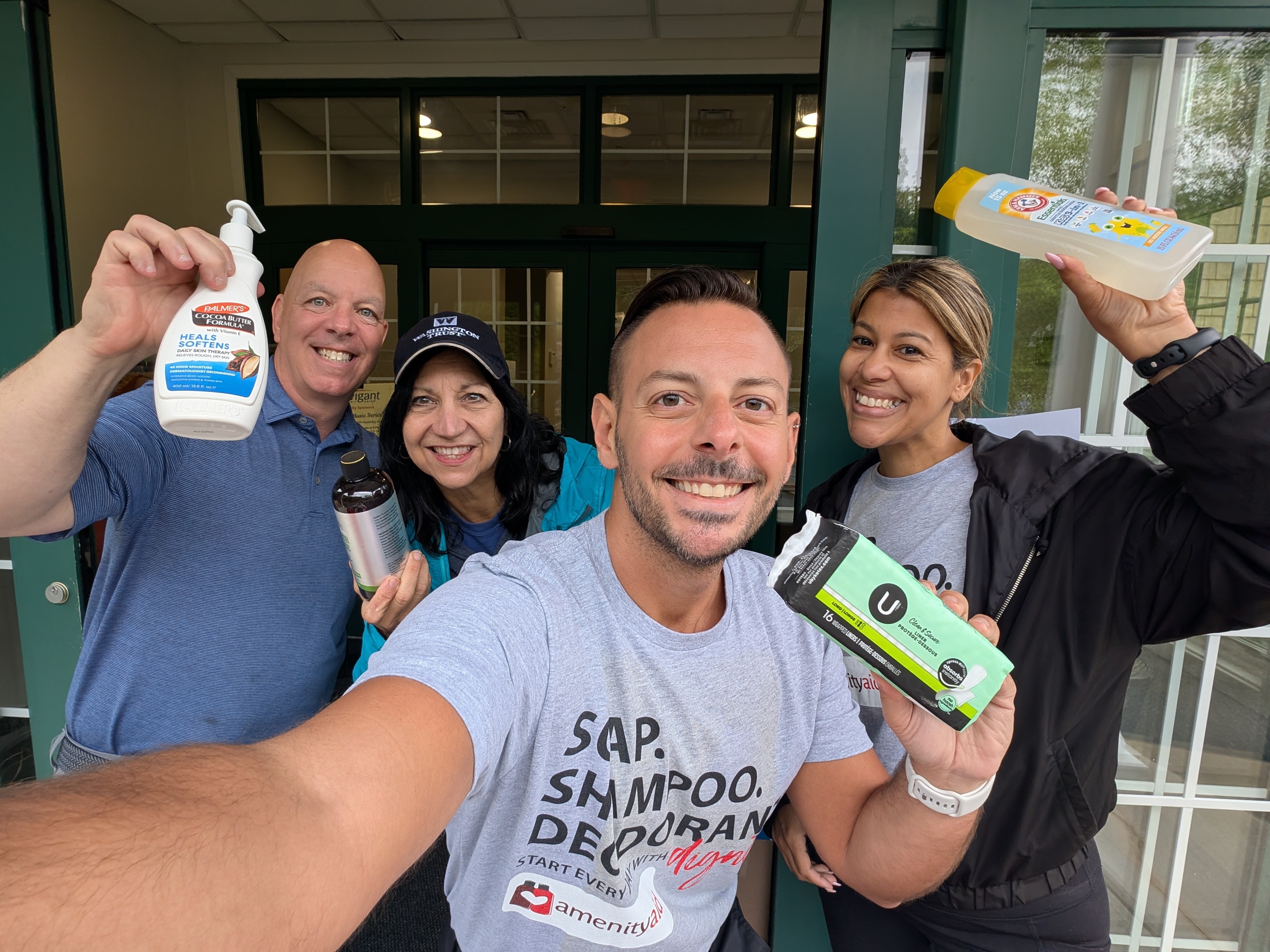
Photo courtesy of Amenity Aid.
I learned a very hard lesson early in life: Dignity is not always a choice, but it is a necessity. Growing up with my younger sister, it was my single mom who worked day in and day out to make sure we had the basics. While we often lacked fancy possessions, we never lacked heart.
It wasn’t until one day that my mom came home with bags of groceries, after telling us she was going to our local church, when I realized where our food came from. I also understood why my aunt and uncle invited us to their home so often. Our community was making sure we were fed.
Being poor demands resilience and resourcefulness. My school peers bullied me daily and one student destroyed every new backpack that I got. That wasn’t the worst part — it was making excuses for my body odor and dandruff that tore up my guilty conscious. By joining the swim team in school — and smelling like chlorine after practice — I used my wit to avoid the shame of being poor. Regardless, the unspoken reality at home was often deafening.
Promoting Dignity Through Hygiene Access
One-third of Rhode Island families struggle with personal hygiene insecurity. Many have to bathe without soap, a basic need we often take for granted. And I can tell you, deodorant felt like a luxury, not a necessity — and that meant dignity wasn’t always in my control.
Today, I write this article as a proud board president armed with my lived experience, my queerness, and my grit to share the unspoken crisis of personal hygiene insecurity. My organization, Amenity Aid, is one of the country’s only hygiene banks, and we’ve just celebrated distributing our millionth product to Rhode Islanders in need. Amenity Aid focuses on what we call “the nine necessities,” including soap, shampoo, deodorant, toothpaste, and feminine hygiene products.
By providing these items through trusted social service partners, families are less likely to forgo other needs such as food, rent, and utilities. Their dignity doesn’t have to be a choice.
How Health Departments Can Help
For the Journal of Public Health Management and Practice, I outlined five key strategies for health departments to support community members facing personal hygiene insecurity:
1. Listen to community voice and honor lived experience.
Asking the community, both through local partners and residents directly, about their needs for personal care products is essential. Which of the nine necessities are most sought after? What specific product needs exist for specific populations (e.g., for babies, specific skin needs or conditions, or different hair types). Perhaps populations who move around need travel kits instead of full-sized products. Or in some situations, unisex products may not be acceptable. Be person-centered and trust that individuals know what they need best.
2. Invest in economies of scale but maintain quality.
Making an investment in a hub-and-spoke model creates scalability, sustainability, and long-term coordination efficiencies. Consider the benefits of partnering with individual organizations or a centralized approach like many food or diaper banks. Determine what types of local organizations already have the capacity to serve in a lead hub capacity if a hygiene bank does not already exist. In either model, partners must preserve dignity by avoiding low-quality products and maintain choice by ensuring diverse options for each hygiene necessity.
3. Develop trusted, cross-sector partnerships.
Cultivating trusted community and corporate partnerships is key. Whether directly providing resources and funds to several organizations or through a centralized hub, a variety of social service partners with trusted client relationships are critical to overcoming isolation and fear and ensuring that community members have the products they need. Corporate partners are also important and can lead to product donations or critical resources through grants, awards, or sponsorships.
4. Improve multicultural awareness and education.
Addressing the quiet crisis of personal hygiene insecurity requires branded awareness materials, educational resources, and engagement opportunities. When possible, materials should be informed by local data and need. At all times, print, audio, and web materials should be translated into multiple languages and reviewed for accessibility. Any qualitative stories should also be de-identified to protect recipients from stigma.
5. Champion policy changes that disrupt the status quo.
Creating lasting impact through policy, systems, and environmental changes is necessary to improve population health outcomes. For some organizations, it might start with a simple proclamation to celebrate National Period Poverty Awareness Week in May. For others, it could lead to introducing legislation that changes the retail status of products, developing a pilot within an existing assistance program, or ensuring current laws protect partners from liability-related product donation and distribution.
Read more in the full article, “Health and Personal Hygiene: Five Key Strategies to Improve Population Outcomes.”