 With every work trip I take, I’m reminded that public health communications isn’t just messaging or guidance. It’s personal, and people are paying attention.
Since becoming the Public Health Communications Collaborative’s (PHCC) first-ever director last March, I’ve had the opportunity to travel and represent PHCC across the country, spending time with public health leaders and communicators and learning how they are navigating the ever-evolving health information landscape. Being in person allows for candid, meaningful conversations about the opportunities and challenges facing public health communicators. These moments are the best part of the job.
However, some of the most revealing conversations I’ve had lately weren’t held at conferences or expert roundtable discussions. They’ve happened on the way to these events, seated in the backseat of a rideshare or taxi. While in the car, these spontaneous exchanges, sparked by a simple “What brings you to town?”, often become powerful moments of connection about public health, misinformation, and trust, and what our work means for the American people.
During a recent ride, the driver asked me, “So, what brings you to Asheville?” I said I was traveling for work. A few questions later, prompted, I mentioned that I work in public health. The conversation went quiet. The pause felt like it went on for hours as I worried that I had steered us into uncomfortable territory. A few moments later, the driver shared their real and honest reactions to a slew of public health topics: the COVID-19 vaccine, Health and Human Services Secretary Robert F. Kennedy Jr., and the state of public health overall.
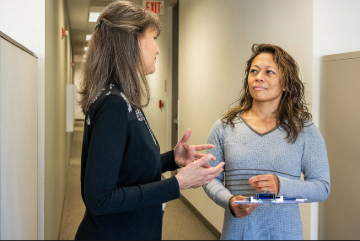
There were some stark differences in how we each approached these topics. My public health instincts were pulling me into talking point mode. But it got me thinking — how many of our go-to talking points for sensitive topics in public health are going to meet the person where they truly are? Instead, I told myself to sit back and just listen. For the rest of the drive, I tried to meet their questions with curiosity and openness. I listened, reflected, and sometimes shared a perspective of my own. Not to convince, but to connect. The time flew by, and as we were rolling into the entrance of my hotel, they said, “You’ve given me something to think about.”
To me, that’s a small win. These exchanges reflect the power of empathetic communication — a reminder that sometimes, the most impactful public health conversations take place in the most unexpected places. It’s moments like these that underscore why frameworks like Communicating with H.E.A.R.T. in Public Health 2.0, a new resource from PHCC, are so valuable. It provides practical considerations for centering empathy and compassion in public health communications using the H.E.A.R.T. method: Humility, Engagement, Accessibility, Resonance, and Transcreation. These principles aren’t just for planned campaigns. In fact, they’re just as powerful in off-the-cuff conversations, like those that unfold in a rideshare.
Everyday interactions, even brief ones, can serve as quiet but meaningful opportunities to practice empathetic public health communication. By leading with curiosity rather than correction, we can create space for honest dialogue, plant seeds of understanding, and begin to rebuild trust, one conversation at a time.
The next time you’re traveling for work, I encourage you to strike up a conversation with your driver and see where it takes you.