Questions?

Contact us at
[email protected]

Community Data for Health and Environmental Justice is strengthening the resilience of marginalized and front-line communities in the context of climate impacts, including local climate and environmental justice planning and policy development.



The Coalition of Communities of Color and its partners are using community data to build resilience against climate-related events such as heat waves, ice storms, and wildfires. Their local data ecosystem is informing the material needs of impacted communities, uplifting the challenges communities face in obtaining resources amid climate crises, and revealing where targeted investments can support communities of color and low-income residents on the front lines of climate impacts.

Read Community Data Is Trusted Evidence, by Mira Mohsini and Andres Lopez of the Coalition of Communities of Color, in the Stanford Social Innovation Review series on transforming data for equity and justice.

Community Data for Health and Environmental Justice partners:

  • City of Portland Bureau of Planning and Sustainability
  • Coalition of Communities of Color
  • Multnomah County Health Department
  • Multnomah County Office of Sustainability

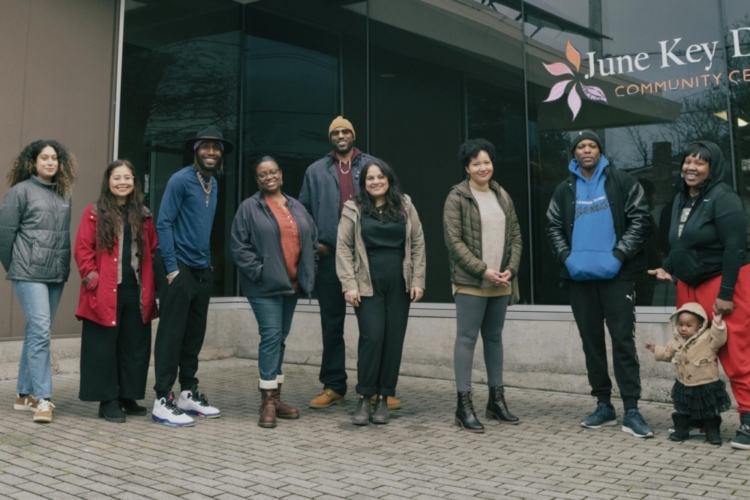
Photo courtesy of Coalition of Communities of Color Staff

โ€œClimate change requires creative solutions that are informed by data systems built on anti-racism and center our communities. We are ready and excited to implement this bold, community-led approach to create a data ecosystem that supports Portlanders most adversely affected by the climate crisis.โ€

Donnie Oliveira, Director, Bureau of Planning and Sustainability, City of Portland

โ€œWe are proud to continue partnering to better understand and act to correct the health inequities faced by our many different communities. We look forward to learning from our partners and finding new ways to work together.โ€

Brendon Haggerty, Healthy Homes & Communities Manager, Multnomah County

โ€œWe have known for a long time that climate change and pollution are not affecting all of us equally. Communities of color and low-income folks are on the front lines experiencing higher temperatures, higher utility bills, greater exposure to unhealthy air, and more. A strong data ecosystem built by and for our communities will help us cultivate justice in a changing climate.โ€

Marcus C. Mundy, Executive Director, Coalition of Communities of Color