
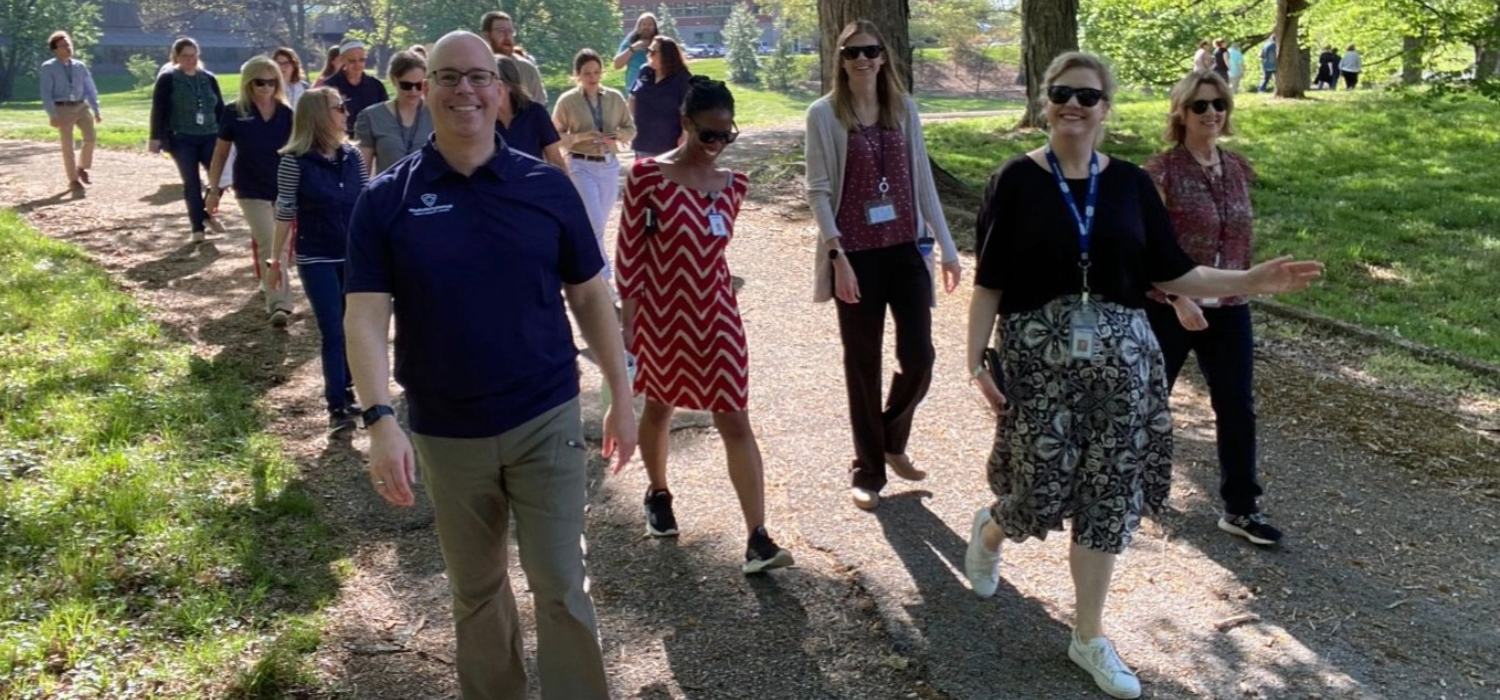
Kentucky Department for Public Health (KDPH) employees walking together.
Kentucky didn’t just participate in the Public Health Workforce Interests and Needs Survey (PH WINS). They executed it with precision. States across the country want to know their secret. How did they achieve exceptional response rates? And how did they crack the code for turning data into action? The answer is relentless intentionality.
The Champions Who Built the Blueprint
When the 2024 PH WINS cycle opened, the Kentucky Department for Public Health (KDPH) appointed two workforce champions: Madison Yerges, MPH, MHA, Public Health Student Education Section Supervisor, representing the state agency; and Ashley Carroll, MPH, Local Health Department Workforce Training Program Administrator, representing all 61 local health departments (LHDs). Together, they launched one of the most coordinated PH WINS rollouts in the country.
Their first move was to create a Standard Operating Guideline (SOG), a detailed, month‑by‑month roadmap stretching from July through December. It outlined outreach timelines, division responsibilities, promotional materials, communication channels, and recurring touchpoints. “We really just put together a plan and a timeline of what we were going to do,” said Carroll.
The SOG broke the rollout into manageable pieces and ensured the state and local strategies mirrored one another, explained Yerges. When they realized they needed to verify nearly 900 staff emails, that SOG became essential.
The Promotional Strategy and Partnerships That Pushed Them Ahead
A few days prior to the survey launch, the two PH WINS champions were primed and ready for take-off, and all they needed was a pep rally. And that’s just what they got. The Commissioner for Public Health recorded a video urging staff to participate, which was played at two department‑wide meetings. Staff hearing directly from leadership on the importance of the survey was crucial, and the timing couldn’t have been better.
Launch day was September 9, and they both remember it vividly. “We were texting each other during lunch, ‘Have you gotten the email? It’s here,’” Yerges recalled. They completed the survey immediately, probably among the first in the commonwealth.
Afterwards, they spent months promoting PH WINS across Kentucky, not just sending emails but presenting at statewide meetings, joining monthly regional liaison webinars, sending division‑specific reminders, and creating and distributing a one‑page flyer. Their immersion in the work was intense.
“I always joked that I started dreaming about PH WINS,” Yergis said. It wasn’t far from the truth. They monitored response rates daily, tracked progress across divisions, and kept the survey visible for months. Yerges said she was determined to exceed their 2021 response rate of 34 percent.
Their efforts paid off with KDPH achieving a 46 percent response rate, well above their 2021 rate and the 29 percent national average for state health agencies. Also, the local health departments reached 49 percent, even higher than KDPH itself.
But they don’t take all the credit.
Their enthusiasm was matched by KDPH’s five Area Health Liaisons who sit within the Division of Public Health Protection and Safety. They have longstanding relationships with all 61 local health departments and made PH WINS a recurring agenda item across Kentucky. “I don’t think we would have had that response without their partnership,” Carroll said. “They know how to best share information, and they kept it in front of people every single month.”
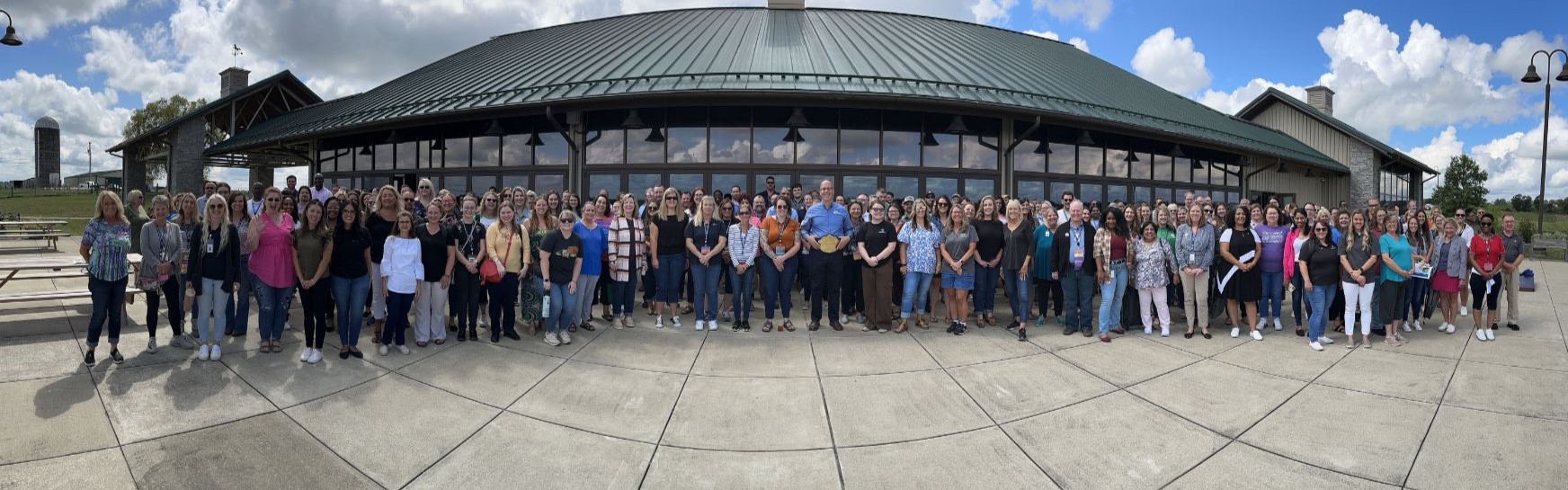
Kentucky Department for Public Health (KDPH) employees at an in-person meeting.
The Insights Behind the Numbers
When KDPH received its 2024 PH WINS results, the numbers were enviable. Workforce data was unusually strong: job satisfaction above 94 percent, benefits satisfaction above 85 percent, and a remarkably low intent to leave.
But for Kentucky, that wasn’t the end of the story. Kentucky uses PH WINS as part of a larger strategy that allows them to dig deeper into the numbers and hear the voices behind them. So, they went beyond PH WINS results and reviewed the findings from their very own Workforce Pulse Survey, launched in 2023 to track workplace sentiment, culture, and emerging needs throughout the year. The survey now runs twice annually and includes both quantitative measures and open‑ended questions. It has become a core part of how Kentucky monitors workforce well‑being and aligns its strategies with real staff experiences.
“We saw comments like, ‘Do y’all even read this?’” recalled Chief of Staff Ellen Cartmell. “It was a fair critique. And it pushed us to be more intentional about showing staff that we hear them.”
Staff wanted clearer communication, more visible follow-through, and reassurance that their feedback wasn’t disappearing into a void. Those insights were candid, specific, and sometimes pointed, and they became the catalyst for a more intentional, more strategic, and more transparent workforce approach.
A Workforce Ecosystem Where Data Drives Action
“We use the data. We keep our leadership informed, and leadership keeps our employees informed,” said James House, Workforce Director for the Public Health Infrastructure Grant. “That relationship, that loop, is a huge part of why our workforce stays engaged.”
Kentucky has redesigned how it communicates survey results and follow-through. Now, every survey cycle includes visible action:
- Results are shared at department‑wide meetings.
- Managers review data with their teams.
- Leadership highlights what decisions were made based on staff input.
- Workforce committees use both PH WINS and internal survey data to set priorities.
This transparency has become a defining feature of Kentucky’s workforce culture. It strengthens trust, increases satisfaction, and attracts new talent, including 17 interns who recently transitioned into full-time roles.
Staff see their input reflected in leadership decisions, training priorities, and communication practices. As a result, surveys are not viewed as administrative tasks but as meaningful opportunities to shape the department’s direction. For example,
PH WINS data feeds into:
- The KDPH Strategic Plan 2025-2029
- The Public Health Infrastructure Grant workplan
- The Workforce Development Plan
- Two internal surveys assessing workforce development and impact.
- Cross-functional workforce committees
- Local Health Department training offerings
Every plan crosswalks with every other plan. Every dataset informs every other dataset. Kentucky has built a system where workforce data is not a lagging indicator, it is a leading one. “We bake data into everything we do,” said Nathaniel Wilson, Director of the Public Health Protection and Safety Evaluation Center. “It’s how we translate feedback into action.”
How PH WINS is Informing Training Priorities
PH WINS highlighted several statewide training needs, closely mirroring national trends. Budget and financial management topped the list, with more than half of respondents identifying it as a gap. Policy engagement, systems thinking, change management, and community engagement followed.
Kentucky responded with a multi-layered training strategy:
- Supervisor and leadership development
- A six‑session series with Eastern Kentucky University
- Virtual statewide supervisor training through the Kentucky Community & Technical College System
- Leadership sessions at the Kentucky Public Health Association Annual conference
- University partnerships – Nine universities now support tuition assistance and professional development for public health employees.
- Communication skill-building – A partnership with Toastmasters helps staff strengthen public speaking and communication confidence.
- Data literacy with PH WINS – Highlighting the importance of data-informed decision-making, Kentucky expanded training to help staff interpret and use workforce data effectively.
- Coursera access – All KDPH employees can access thousands of online courses aligned with PH WINS competencies.
These offerings are available not only to state employees but also to local health departments, a deliberate choice to strengthen the entire public health system.
Staying Ahead of the Curve
Kentucky plans to continue using PH WINS as a cornerstone of its workforce strategy. Future priorities include expanding data literacy, refining pay equity, strengthening leadership development, and exploring whether the Workforce Pulse Survey model could be extended to local health departments.
“We’re always thinking about what’s next,” House said. “PH WINS helps us stay ahead of the curve.”
Kentucky’s story shows what happens when a state invests just as much energy in collecting workforce data as it does in acting on it. PH WINS didn’t just give them numbers; it gave them a system for listening, responding, and strengthening their workforce year after year.
Have you been using PH WINS? Let us know! Please fill out this short form to share how you and your agency are using PH WINS to inform your work. Your feedback helps us highlight how PH WINS data drives public health progress — no story is too small.