 Government public health professionals are more burdened by student loan debt than ever before, shows new research published Jan. 22 in The American Journal of Public Health.
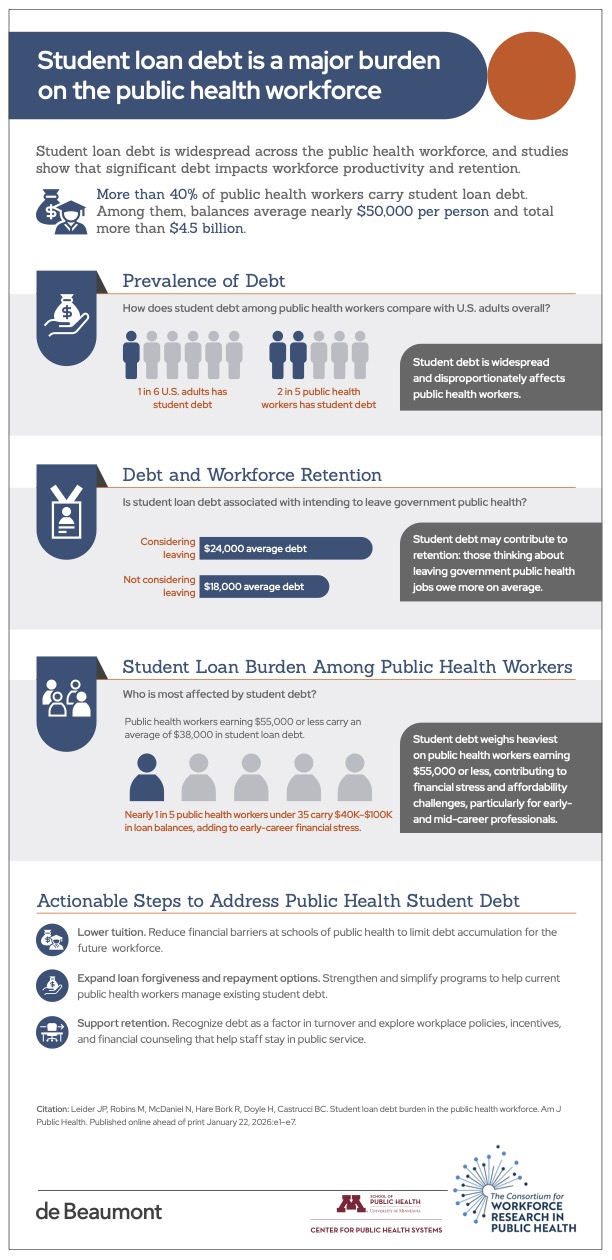
The study from the University of Minnesota School of Public Health and the de Beaumont Foundation found that more than 40% of public health workers carry student loan debt, and that among them, balances average nearly $50,000 per person and exceed $4.5 billion in total.
The findings were based on student loan data from the 2024 Public Health Workforce Interests and Needs Survey (PH WINS), which included nearly 57,000 respondents from state and local health departments.
Public Health Workers Struggle Under the Biggest Loan Burdens
Repaying student debt is a major financial concern for borrowers across industries, and especially among public health professionals. According to the study, 2 in 5 public health workers carry student debt, compared with 1 in 6 U.S. adults overall.
Student debt weighs most heavily on public health workers earning $55,000 or less, who carry an average student loan balance of $38,000, compounding financial stress and affordability challenges. Early- and mid-career professionals are also hit particularly hard — while younger employees are more likely to have student loans, more than one-third of borrowers ages 36 to 49 still owe at least half of their original loan balance.
The study suggests that the burden of student loan debt may affect workforce retention. Those considering leaving their jobs in government public health owe an average of $24,000 in student loans, compared with $18,000 among those who plan to stay at their agencies.
Protecting Current and Future Public Health Workers Amid Mounting Debt
Health departments are facing high rates of turnover and struggling to bring in employees. Lack of competitive pay and benefits at public health agencies is already a barrier to recruiting and retaining staff; professionals with a public service inclination who have significant debt may seek employment in higher-paying fields outside of government public health.
“Public health workers experience a significant student debt burden, which undermines their financial stability, contributes to burnout, and affects workforce turnover,” said Brian C. Castrucci, DrPH, de Beaumont president and CEO, and a study author. “By reducing tuition and improving loan repayment options, we can begin to close the gap between what a degree costs and what students can reasonably afford.”
Although programs to ease the hardship of debt on public health professionals do exist, making them accessible to borrowers is another challenge.
“Loan forgiveness and repayment programs can make a meaningful difference, but eligibility rules, funding limits, and recent policy changes may reduce their availability and their impact,” said lead study author JP Leider, associate professor and director of the Center for Public Health Systems at the University of Minnesota School of Public Health. “We need a strong public health workforce to keep communities healthy and safe, and reinvesting in these programs that address student debt is an essential part of attracting and retaining public health professionals.”
This blog was adapted from this article published by the University of Minnesota School of Public Health.