 Government public health is powered by women. Nearly 80% of the state and local government public health workforce identifies as women, the 2024 Public Health Workforce Interests and Needs Survey (PH WINS) finds. Women fill vital roles in health departments, from policy analysts to emergency preparedness staff and epidemiologists to health officials. They work in small rural health departments and large state agencies. They supervise teams. They run programs. They keep communities healthy. Despite their outsized representation in public health, women are less likely to serve in leadership positions and to be compensated at the top of the pay scale.
Leadership Gap
Even though women comprise most of the workforce, they make up a smaller share of leadership roles: Seventy-three percent of managers and 74% of executives. That may not sound significant, but gaps of even 6% to 7% represent thousands of women. Even when adjusting for job type, type of health department, and education, men still have 13% greater odds of holding a higher supervisory status than women.
That tells us this isn’t just about the types of jobs women hold or where they are more likely to work. There is a structural difference in who moves up. Women are not moving into leadership roles at the same rate as men, limiting both individual career trajectories and the strength of the field overall.
Salary Gap
A gap is also clearly reflected in salary. Thirty percent of women in government public health earn $55,000 or less, compared with 20% of men. This is inversely true at the top; just 14% of women earn more than $105,000, compared with 20% of men. The graph below shows the percentage of women and men within each $10,000 salary band, highlighting gaps across the pay scale.
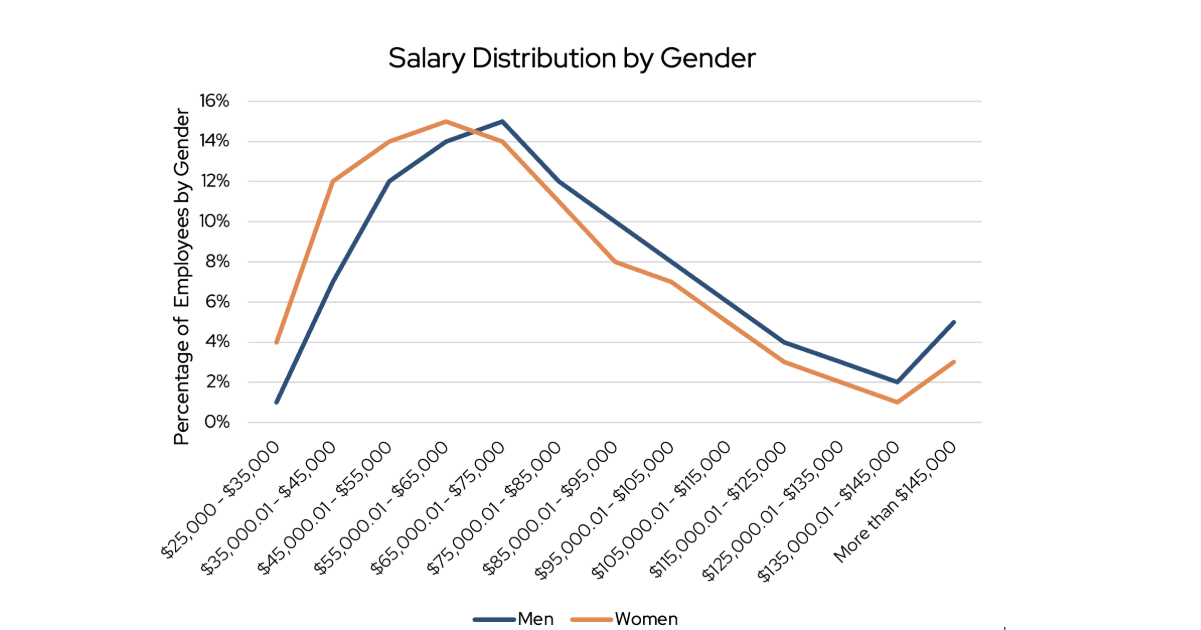
de Beaumont Foundation and Association of State and Territorial Health Officials. (2025). Public Health Workforce Interests and Needs Survey 2024 [Restricted-use dataset]. https://www.phwins.org/
This trend holds true even when accounting for job type, type of health department, education, and supervisory status. Men still have 26% greater odds of being in a higher salary band than women. That means these inequities are not explained by women more often working in roles with lower salary bands; the salary gap persists even among people doing similar work.
Public Health Is Already Underpaid
Government public health already pays less than comparable roles in the private sector. Many professionals choose this work out of commitment to healthier communities, job stability, or mission — not because it’s the most lucrative option. And the situation hasn’t improved in recent years.
A recent study in the Journal of Public Health Management and Practice found that inflation-adjusted wages in government public health saw no real growth from 2017 to 2024. In other words, after accounting for rising costs of living, public health workers are not earning more than they were seven years ago. On top of relatively low and stagnant wages in public health, women in the workforce are also earning less and advancing less often than men.
What Comes Next?
Women are the backbone of the public health workforce, but their dedication should not come at the cost of equitable pay or leadership opportunity. A strong, stable public health system requires investment in the people who sustain it, and that means closing the leadership and salary gaps that continue to disadvantage women. This isn’t a problem with a single solution, but there are some steps that agencies can take:
- Conduct regular pay equity audits. Agencies should systematically examine salary differences by gender, race, and role and correct inequities when found. Agencies that have participated in PH WINS can use the dashboard as a starting point to analyze differences in salary across demographics and workforce characteristics.
- Increase salary transparency and ensure hiring processes are equitable. Clear pay bands and transparent promotion criteria help reduce disparities. Resources like Insights to Action’s equity recruitment checklist can support these processes.
- Strengthen leadership pipelines for women. Mentorship programs, sponsorship, leadership development opportunities, and succession planning should intentionally support women’s advancement. Agencies can leverage Insights to Action resources such as the Mentor–Mentee Discussion Guide to structure meaningful mentoring relationships. Additionally, the Public Health Leadership Programs resource provides a curated list of formal leadership development opportunities that can support women in the workforce.
- Advocate for sustained public health funding to better support the workforce and the communities they serve. Closing pay and leadership gaps requires adequate, stable funding streams that allow agencies to offer competitive compensation and invest in staff development.
Supporting women in public health isn’t just about equity, it’s about protecting the future of the field itself.