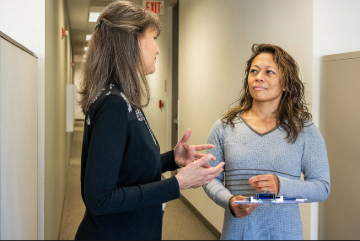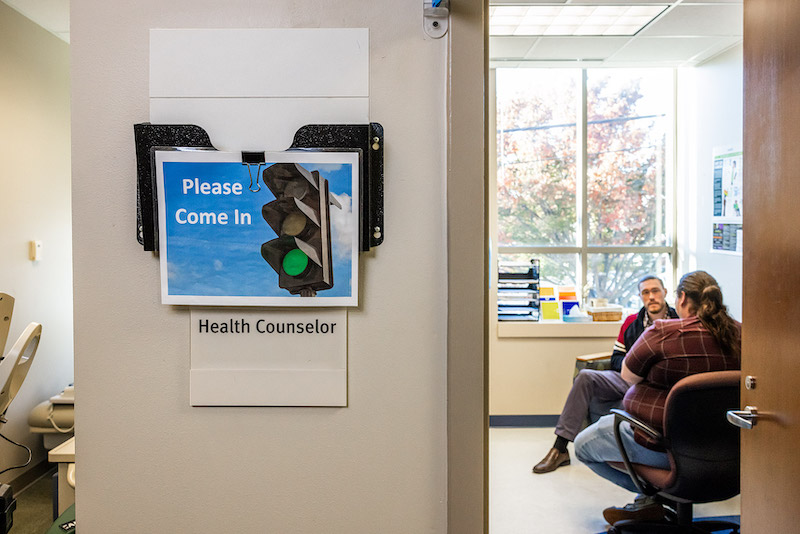
Meaningful access to federal services for people with limited English proficiency is critical to their health, safety, and well-being. (Photo credit: Rebecca Drobis)
I remember it like yesterday: I’m 10 years old, sitting at a doctor’s office with my mom. She has been experiencing some difficulty swallowing food and requires specialized care. I’m there as her translator; me, a child, as the bridge between an English-dominant health care system and a Vietnamese patient. I do my best, but with no grasp of medical terminology in either language, I have little chance of accurately describing my mom’s concerns. In the end, her issues remain unresolved.
Years pass. Another moment of need. Like a bad song on repeat, I’m back at the doctor’s office, this time with my uncle, and still without the medical knowledge and terminology needed to translate accurately. Unlike my mom’s encounter, though, we have an interpreter provided by the hospital, allowing us to openly share our questions and concerns about the procedure and establish a strong relationship. The surgery is successful, and my uncle’s quality of life is significantly improved. We’ve lived with the pain for so long that the relief we all feel is indescribable. This moment marked a turning point — not just for my family, but in my understanding of how vital language access can be.
Growing up as a family translator is not a unique experience; to this day, it is practically a rite of passage for children of immigrants and refugees across the U.S. This unspoken responsibility has been eased over the last few decades, partly due to increased language access guaranteed by a Clinton-era executive order, Improving Access to Services for Persons With Limited English Proficiency. The executive order led to changes like expanded interpreter services in hospitals and translated school forms, all of which I benefited from.
Now, in 2025, what that executive order guaranteed, another seeks to destroy.
Chuyện gì xảy ra vậy? What happened?
On March 1, 2025, President Trump signed an executive order establishing English as the United States’ official language. While it does not require any changes in services currently provided by federal agencies, it quietly nullifies President Clinton’s mandate that ensures “meaningful access” to federal services for people with limited English proficiency (LEP).
Vậy thì sao? What does this mean?
Meaningful access includes oral translation via in-person or telephone interpretation and written translation of materials. Without access to these supports, my family, like many others, would have been barred from obtaining resources and continued to live in pain due to limited English.
According to the American Community Survey (2023), 1 in 5 people over the age of five speaks a language other than English, and more than 26 million people likely rely on language assistance for health care, transportation, legal, emergency, and housing services, among others.
This is not a question of who is or isn’t a citizen, nor is it about “illegal immigration”— millions of people who contribute to and are part of our communities need language support to access basic services and exercise their rights. Language access is an investment in healthier and more connected communities, even with a “national language.” It’s woven into the fabric of how we operate.
Tác động là gì? What is the impact of reducing or removing support for LEP resources?
The availability of robust interpretation services strengthens health care and public health by ensuring effective communication between clients and service providers. When people can express their concerns and understand health guidance in their preferred language, they are more likely to receive needed support, leading to better long-term health outcomes. Language access promotes public health and health care systems in which everyone, regardless of their primary language, can navigate services with confidence and clarity.
When interpretation services or translated documents are unavailable, entire communities can be left behind. People with limited English proficiency can miss critical information on many factors that influence health, including warnings for natural disasters, disease prevention during outbreaks, and opportunities for safe and affordable housing during housing crises.
Language availability and client-centered services also help build trust in systems. When people feel understood and respected, they are more likely to seek and utilize essential health and social services. This trust and participation are critical for successful public health efforts, and, most of all, healthy communities.
Điểm tích cực ở đây là gì? Is there good news?
The good news is that the Civil Rights Act and the Affordable Care Act prohibit discrimination based on race, color, and national origin, protections that a single executive order cannot dismantle.
The recent executive order also makes one thing clear: agency leaders have the power to ensure meaningful language access. Leaders should lean into this power by safeguarding and expanding language access. While these policies and decisions take shape at the federal level, their ripple effects reach every local clinic, public health initiative, and community service that depends on translated resources.
Language access is a lifeline. Language should never be a barrier to health, safety, or opportunity. Yet, without robust interpretation, too many people are left struggling to access the resources they need. Language access is a commitment to public health and community well-being. It means supporting children, like my younger self, who have had to take on the role of translator for their families. It’s about parents who should be able to make informed decisions about their children’s health. It’s not just about words — it’s about the fundamental right to understand and be understood.