You have to act as if it were possible to radically transform the world. And you have to do it all the time. —Angela Davis

What a historic time to be ending my fellowship in a public health philanthropy. I’ve experienced grief and uncertainty but have also grown and reflected on what it means to work in public health and philanthropy. Working at the de Beaumont Foundation during a global pandemic helped me gain a better understanding of philanthropy’s ability to quickly pivot, deploy funding in an efficient manner, and shift priorities in the face of uncertainty. The foundation’s funneling of financial resources helped build the capacity of front-line public health staff in their response efforts, which aligned with the organization’s strategic priorities. What also stood out to me is my colleagues’ capacity to advocate for public health at a time when its credibility has been attacked and its resources have been eroded.
Amid these challenges, public health needs to use its platform to amplify justice and show up on multiple fronts. We are in the midst of a terrifying pandemic, the unrelenting re-traumatization and abuse of Black communities, and a transnational civil rights and racial justice movement. These are interrelated matters that demand public health action. During these crises, expecting resiliency from our communities is a travesty when our systems aren’t resilient. Containing and mitigating the effects of COVID-19 becomes all the more challenging in a society riddled with inequities, systemic racism, censorship of science, and neglected public health institutions.
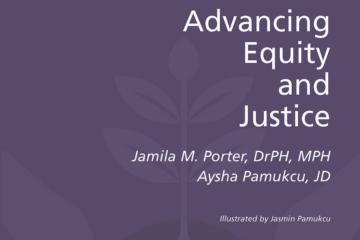
My time at de Beaumont was transformative in various ways. As a recent graduate previously confined to the academic public health bubble, this experience allowed me to build a network of remarkable public health practitioners at different stages in their careers. The fellowship helped me give color to the images I had of public health and philanthropy. From attending fascinating meetings with city health officials at the Centers for Disease Control and Prevention to collaborating with change agents whom I admire, I was lucky to access these opportunities early on in my career. Co-leading the coordination and creation of a policy book was another highlight of my experience. I was able to explore my interest in health policy and equity with leaders who have dedicated their careers to this work. It was surreal. Plus, producing a book is no joke.
As a fellow, I was strongly encouraged to write, and I’m glad that I was able to step out of my comfort zone (or maybe I was dragged out) with my colleagues’ support. Writing and publishing my first blog post was terrifying, but it felt important. I hope to continue writing as a way to build a voice in this field and reflect my commitment to co-creating a healthier society.
Before coming to de Beaumont, I knew so little about the public health workforce and didn’t realize that public health was so severely underfunded. Here, I learned about the politics, the people, and the solutions. These insights have created an invaluable blueprint into public health and philanthropy.
This experience drove me closer to the people who carry public health on their shoulders. In my new role, I will join the workforce development sector in maternal and child health. I look forward to applying my knowledge of the public health workforce, support efforts to advance equity, and build the capacity of Title V programs and leaders. I’m excited to learn alongside my colleagues, envision the impact that public health is capable of accelerating, and facilitate transformative change.
Keeping equity and justice as core values in my life demands a constant reimagining of what a thriving society looks like. As I navigate life and work, I commit to speaking these ideals into existence. It shouldn’t take tragedies or emergencies to affirm and practice public health’s commitment to eradicating racial injustice. I expect to see public health’s sustained presence in these historic movements, because there’s no ethical public health praxis without social justice, anti-racism, and advocacy at its core. Anti-racist practices inform how we confront ourselves and the institutions we buy into, gather and interpret data, develop policy, interact with our communities, and constructively hold each other accountable. I find it equally important to underscore that systems of oppression don’t operate in silos. Being anti-racist requires standing up against classism, transphobia, colonialism, and other forms of violence.
Recent tragedies and injustice have prompted necessary discussions around philanthropy’s need to become anti-racist. These conversations are long overdue, but I hope they serve to catalyze transformation. Moving forward, I envision authentic and participatory ways of giving. I hope that philanthropy moves beyond complacency and embraces progressive change and humility. I also believe that philanthropy needs to expand and adapt its traditional criteria to measure impact, especially when projects are geared towards equity and justice. Philanthropy should embrace boldness, flexibility, and openness to sharing power and diversifying. This is a time to walk the talk.
The de Beaumont family taught me to disrupt. Although that term typically carries negative connotations, I see it as an act of rupturing the status quo and what we take as our indelible truth. I look forward to witnessing public health philanthropy disrupt and transform for the betterment of the communities they serve.